When nutrition experts talk about food diversity, they're usually counting something very specific: plant points. Here's what they are, what counts, and how to boost your numbers without eating any more than you already do. And no, it doesn't mean a trolley full of things you've never heard of!
The short version: food diversity means eating a wide range of different plants, usually counted as 30 or more a week. Herbs, spices, nuts, seeds and wholegrains all count.
Most of us have a rotation. The same porridge, the same lunchtime salad, chicken and broccoli three nights a week. On paper it looks healthy, and in many ways it is, but it quietly misses something that nutrition experts have been pointing at for years.
What Are Plant Points?
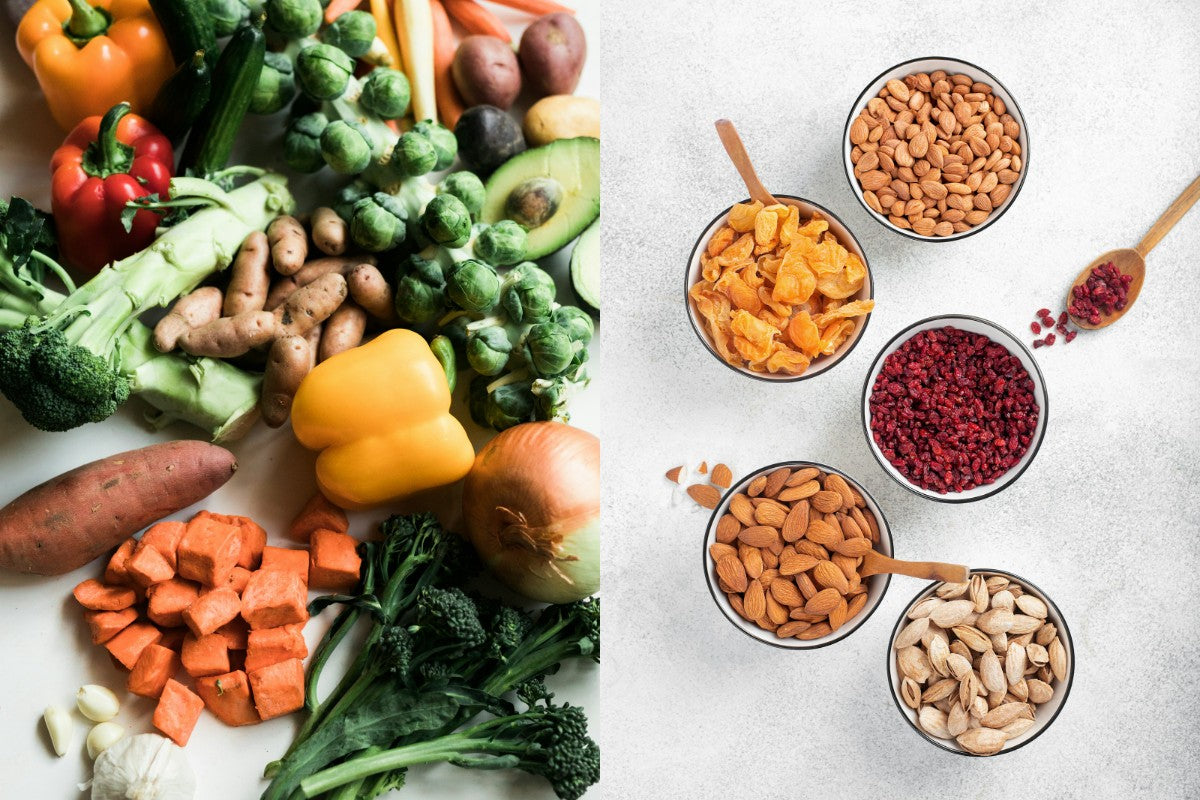
A plant point is one different plant you eat in a week. Vegetables, fruit, wholegrains, nuts, seeds, beans, pulses, herbs and spices all count, and each one scores a point the first time it appears on your plate.
The key word is different. Eat spinach six times and you've still scored a single point. Eat spinach, rocket, kale, cabbage and watercress once each and you've scored five, for roughly the same effort and the same shelf space.
That's really all food diversity means: how many different plants, not how much.
How Many Plants Do We Need?
Thirty is the number you'll see quoted, and it comes from one particular piece of research. A pivotal study by the American Gut Project found that people eating more than 30 different plant types a week had a noticeably more diverse gut microbiome than those eating fewer than 10.
It's an observation rather than proof, but it held across thousands of people and it changed how a lot of us think about a healthy diet.
Most people land between 12 and 20 when they first count, so treat 30 as a direction rather than a pass mark.
Why Variety Beats Any Single Superfood
There's no single plant that does everything, which is rather the point.
Fibre isn't one substance: the inulin in onions and leeks feeds different bacteria from the beta-glucan in oats, or the pectin in apples. A narrow range of fibres feeds a narrow range of microbes, which is a large part of why a balanced microbiome depends on variety.
It's worth saying that most of us are short on fibre in the first place. UK adults are advised to aim for 30g a day and the average is closer to 18g, so our six easy ways to get more fibre into your diet are worth a look alongside this.
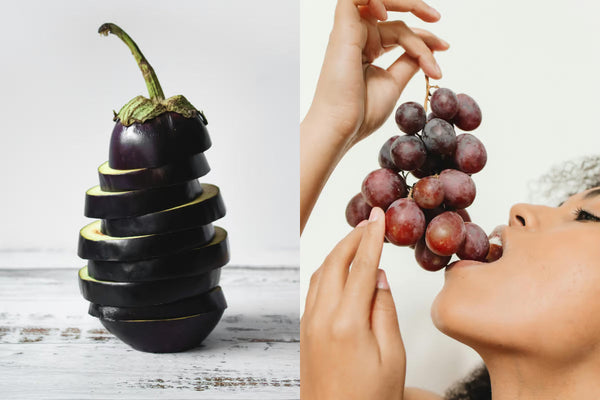
Then there are polyphenols, the compounds behind the colour and bitterness in plants. There are thousands of them, and the ones in blueberries aren't the ones in green tea or rosemary. Colour is a rough but useful guide here, which is where the old advice to eat the rainbow comes from.
What Counts, and What Doesn't
This is where most people get stuck, so here's the working rule.
Counts as a point:
- Any new plant that week: vegetables, fruit, wholegrains, nuts, seeds, beans and pulses
- Herbs and spices: usually counted as a quarter point each, because the quantities are small
- Different varieties: red and white onions score separately, as do red and green peppers
- Coffee, tea, olive oil and dark chocolate: all plant derived, all carrying polyphenols
Doesn't add a point:
- the same plant again later in the week
- refined versions of something you've already counted, like white bread after wholemeal
- anything processed past the point of recognition
And yes, potatoes count, and so do oats. Excluding potatoes is a five a day rule, it's got nothing to do with plant diversity.
Five a Day Isn't the Same Thing
Five a day is a quantity target, and you can hit it perfectly with the same apple, banana, carrot, tomato and handful of peas every single day. That's five plant points for the entire week.
Food diversity is a range target, and it's usually the easier of the two to improve, because it doesn't ask you to eat any more. Swapping between things you already buy moves the number on its own.
Simple Ways to Boost Your Numbers
- Buy Mixed Bags. Mixed leaves instead of one lettuce, mixed frozen berries instead of one fruit, mixed nuts instead of almonds. One purchase, four or five points.
- Use the Spice Rack. Cumin, paprika, turmeric, oregano and cinnamon across a week is more than a point on its own, for almost no effort.
- Rotate Your Grains. Swap rice for barley, bulgur, quinoa or buckwheat rather than reaching for the same bag every time.
- Add a Handful to What You Already Cook. Lentils into a bolognese, frozen peas into a curry, butter beans into a soup.
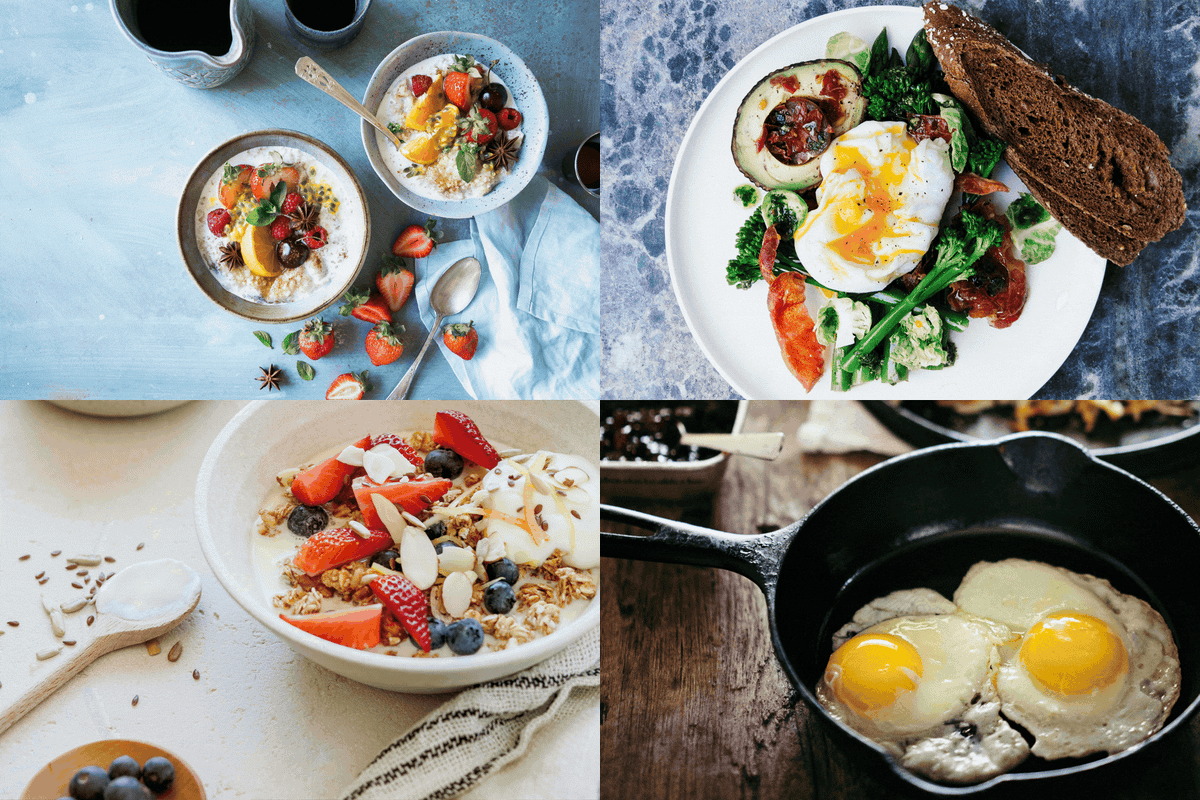
- Start With Breakfast. It's the meal most of us repeat daily, so it's the one with the most to gain. We've put together seven easy breakfast ideas to diversify your diet and a guide to building a gut-friendly breakfast if you'd like somewhere to begin.
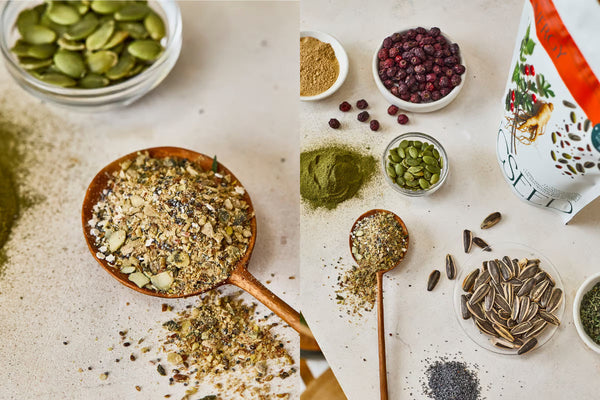
- Let Seeds Do the Heavy Lifting. A spoonful of seeds is the quickest way to add several plants at once, with no cooking involved. SUCSEED Gut Health is a blend of 13 different plants: seven seeds, a flaked wholegrain and five botanicals. Stirred into porridge or yoghurt, that's 13 added to your weekly tally in about ten seconds. There's more on this in why nutrition experts love seeds.
Progress, Not Perfection
Count what you eat this week before you change anything. Most people are surprised, in both directions.
Food diversity isn't a diet and it isn't another rule to fail at. Some weeks will be a scattered 18, some will be 35 without trying, and it's the trend across months that counts. Our recipe collection is built around everyday ingredients with the variety already designed in, and our guide to meeting the 30 plants a week challenge goes further on the practical side.
Food diversity isn't about eating more. It's about eating differently.
Common Questions About Plant Points
What Is a Plant Point?
A plant point is one distinct plant eaten in a week. Vegetables, fruit, wholegrains, nuts, seeds, beans and pulses each score a point the first time you eat them that week. Herbs and spices are usually counted as a quarter point, because the portions are small.
How Many Plants Should I Eat in a Week?
Thirty is the figure most commonly quoted, based on the American Gut Project findings. It's a useful target rather than a threshold, and moving from 10 to 20 is a meaningful improvement in itself.
Do Herbs and Spices Really Count?
They do. They're among the most polyphenol dense foods by weight, and because they're counted as quarter points, four different ones across a week add up to a full point.
Does Coffee Count Towards Food Diversity?
Coffee is plant derived and it's a significant source of polyphenols in the average UK diet, so it counts as a point. The same goes for tea, olive oil and dark chocolate.
Is Food Diversity the Same as Five a Day?
No. Five a day measures how much fruit and veg you eat in a day. Food diversity measures how many different plants you eat across a week, including the grains, nuts, seeds, herbs and spices that five a day leaves out.