Recipes
Seeded Oat Flapjacks With Banana and Dates
The standard flapjack recipe is butter, sugar and golden syrup holding some oats together. This one rebuilds it the other way round, so the oats and seeds are the structure and the sweetness mostly comes from banana and dates, which gets you 16 plant points from a traybake. It's still a treat, and it's a far better one.
The short version: this flapjack recipe cuts the butter right back, leaves out the syrup, leans on mashed banana and chopped dates to bind and sweeten, and makes the seeds load bearing rather than a sprinkle. 16 plant points, 12 squares, about 40 minutes.
These bake in 25 to 28 minutes and come out chewy in the middle with crisp edges. Two very ripe bananas and 100g of chopped medjool dates do most of the sweetening, so there's no syrup in them, and the dates soften into the oats overnight until the whole tray tastes richer on day two.
The one thing that matters is pressing the mix down hard before it goes in the oven. That's the difference between squares and rubble.
Flapjacks are one of the most searched recipes in the country every autumn, and most of us make them the way we were taught. It's worth asking what the oats are actually for.
Why This Flapjack Recipe Works
Oats carry beta-glucan, a soluble fibre that dissolves into a gel as it moves through the gut. That gel slows the whole process down, which is why a bowl of rolled-oat porridge fills you up more than a slice of white toast with the same number of calories.
Beta-glucan is also one of the fibres that gut bacteria ferment, and a wider range of fibres is associated with a more varied microbiome. Oats on their own only give you one of those fibres, which is where the rest of the tray comes in.
- Seeds, as structure not garnish. Pumpkin, sunflower and sesame seeds bring insoluble fibre, which adds bulk, along with minerals and fats the oats don't provide. At 85g of loose seeds plus the blend worked through the mix, they're holding the thing together rather than decorating it.
- Dates, for sweetness that arrives with fibre. Chopped dates sweeten and bind at the same time, and unlike syrup they bring fibre with them.
- Banana, for moisture. Two very ripe bananas replace most of the butter and a good deal of the sugar, and they're what lets the mix hold without a slab of fat.
- Spices, for polyphenols. Cinnamon, ginger, nutmeg and vanilla are four quarter points, which is a full plant point for four teaspoons between them.
UK adults are advised to aim for 30g of fibre a day and the average is around 18g, so a snack that contributes rather than costs is worth having in the tin. Our six easy ways to get more fibre into your diet sets out the rest.
Being straight about it: these are still flapjacks. There's still butter, just less of it, and no food needs defending. The aim is a treat that carries some fibre and some plants along with it, not a treat pretending to be a salad.
Ingredients
Makes 12 squares. Takes about 40 minutes, including 25 to 28 in the oven.
- 250g rolled porridge oats
- 2 very ripe bananas (about 200g peeled), mashed
- 100g medjool dates, pitted and chopped small
- 40g pumpkin seeds
- 25g sunflower seeds
- 20g sesame seeds
- 30g desiccated coconut
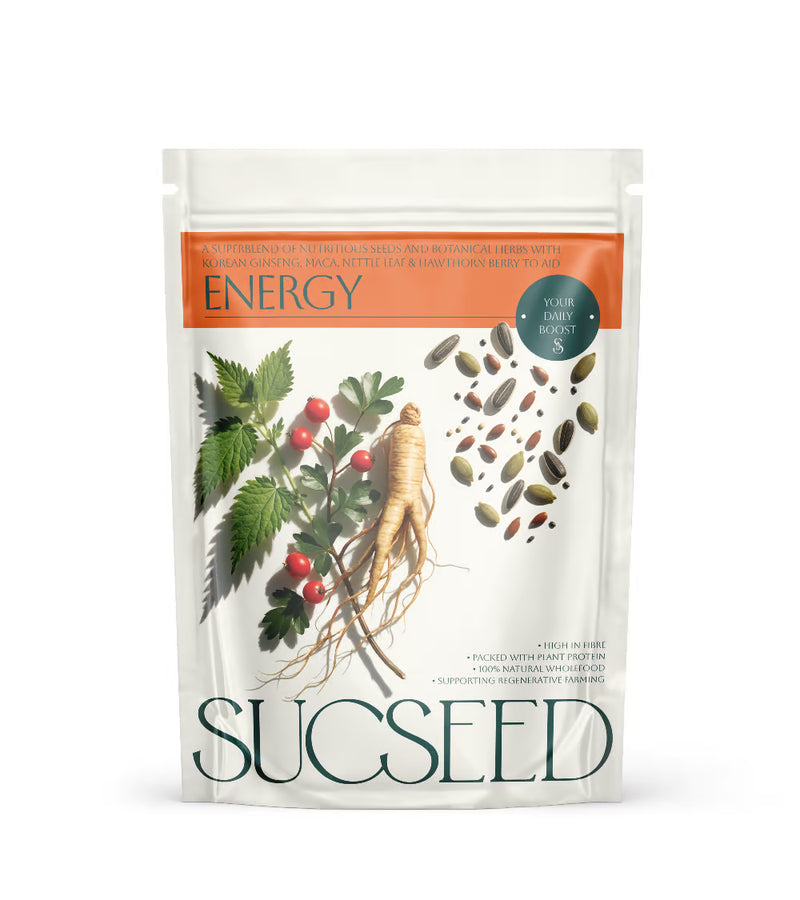
- 4 tbsp SUCSEED Energy
- 60g butter, melted
- 2½ tbsp date paste (about 50g pitted Medjool dates, soaked and blended with a little of the soaking water)
- 1 tsp ground cinnamon
- ½ tsp ground ginger
- ¼ tsp grated nutmeg
- 1 tsp vanilla extract
- A pinch of salt
- 2 tbsp milk or plant milk, only if the mix looks dry
Method
- Heat the oven to 180C fan (200C conventional, gas mark 6) and line a 20cm square tin with baking paper.
- For the date paste, soak 50g pitted Medjool dates in just-boiled water for 10 minutes, then drain, reserving a little of the water, and blend to a smooth paste with 2–3 tbsp of the soaking water. You should have about 2½ tbsp of paste.
- Mash the bananas thoroughly in a large bowl. A few lumps are fine, but anything bigger than a pea will leave a wet pocket in the finished tray. The two bananas already in the mix should be enough to bind it.
- Stir the melted butter, date paste and vanilla into the banana until it looks like a loose caramel.
- Add the oats, dates, all three seeds, the coconut, SUCSEED Energy, cinnamon, ginger, nutmeg and salt. Mix until every oat is coated, adding the milk only if the mix won't come together when pressed, or mash in a little more ripe banana if it still needs binding.
- Tip into the tin and press down firmly with the back of a spoon. Press harder than feels necessary: this is the only thing standing between you and a crumbly tray.
- Bake for 25 to 28 minutes, until the top is golden and the edges have come away slightly from the paper.
- Leave to cool in the tin completely before cutting, which takes about an hour. Cut warm and they'll fall apart.
The Plant Points
Whole plants score a point each. Herbs and spices are conventionally counted as a quarter of a point each, because the portions are small.
One point each, seven in total:
- Oats
- Banana
- Dates
- Pumpkin seeds
- Sunflower seeds
- Sesame seeds
- Coconut
A quarter point each, four in total, giving 1 point:
- Cinnamon
- Ginger
- Nutmeg
- Vanilla
That's 7 + 1 = 8 plant points in the tray. SUCSEED Energy adds 10 of its own, a cold milled blend of seeds and botanicals. Pumpkin and sunflower are in both the tray and the blend, so they're counted once. Total: 16 plant points.
Twelve squares out of one tray means the points are spread thin per square, which is the honest way to put it. Plant points are counted across a week rather than a sitting, and the way plant points are counted rewards variety wherever it turns up, including in the biscuit tin.
Storing This Flapjack Recipe
They keep for five days in an airtight tin and they freeze well, wrapped individually. If anything they improve on day two, once the dates have softened into the oats.
For a version you don't bake at all, the cinnamon spiced overnight oats use much the same thinking, and the gut friendly breakfast guide covers the first meal of the day properly. The rest of the week is in our guide to meeting the 30 plants a week challenge, and there's more in the SUCSEED recipe collection.
A flapjack isn't going to change anyone's diet. A flapjack built out of seven different plants and a spoonful of seeds changes what's in the tin.
Common Questions About Flapjacks
How Many Plant Points in a Flapjack?
Sixteen across the tray. Eight come from the flapjacks themselves, counting seven whole plants at a point each and four spices at a quarter point each, and SUCSEED Energy adds 10 more, less the pumpkin and sunflower seeds that appear in both and so count once.
Are These Flapjacks Sugar Free?
No. Dates and bananas are sweet in their own right. What's changed is the balance: the sweetness comes from fruit that brings fibre with it, rather than from syrup.
Can I Make Them Vegan?
Yes. Swap the butter for the same weight of coconut oil and leave everything else as it is. The coconut oil won't add a plant point, because the desiccated coconut already counts.
Why Are My Flapjacks Crumbly?
Almost always one of two things: not pressing the mix hard enough into the tin, or cutting before it's completely cold. Both are fixable and neither is your fault, since most recipes don't say how firmly to press.
Can I Use Different Seeds?
Any seeds work, and using three different ones rather than a single pile of one is the trick. Nutrition experts rate seeds for their fibre, minerals and fats, and each different one you use scores another plant point.
Which SUCSEED will you use?
SUCSEED Energy